Twenty-five years ago, breastcancer.org set out to create something that didn’t exist — a trusted, comprehensive resource where people facing breast cancer could find expert medical information, connect with others facing similar experiences, and feel empowered to make informed decisions about their care. What began as a vision to fill critical gaps in patient education and support has grown into a global lifeline that millions of people depend on during their most challenging times.
Their reach has expanded far beyond what they ever imagined possible, touching lives around the world, yet their vision remains unwavering: to transform lives through compassionate, personalized breast cancer care. Building on their legacy of medical expertise, global reach, and the trust of millions, they’re shaping a future where every person impacted by breast cancer receives the best care and support they deserve.
As they celebrate the remarkable milestone of their 25th anniversary, we reflect on the power of community — the patients and caregivers who share their stories, the medical experts who contribute their knowledge, the advocates who amplify critical voices, the extraordinary Breastcancer.org team members who transform their vision into reality, and the generous donors and partners who make their work possible.
Here is an excellent article I found on the internet about breast cancer treatment through the years. Thank you Katie Couric for sharing this!!
https://katiecouric.com/health/cancer/breast-cancer-history/
By Lisa Rapaport, Reuters Health
(Reuters Health) – White women with breast cancer are more likely to complete their prescribed chemotherapy regimen than women of color, a U.S. study suggests.
Just 50 percent of non-white women in the study finished all of their prescribed treatments, compared with 76 percent of white women, researchers found.
The study included 124 women prescribed so-called neoadjuvant chemotherapy, treatment often recommended before surgery for patients with larger cancers because it can shrink tumors and allow for less extensive operations. Overall, 92 women, or 74 percent, completed their neoadjuvant chemotherapy.
After accounting for factors like age, insurance status and tumor size, white women were more than three times as likely to finish neoadjuvant chemotherapy as black, Hispanic and Asian women.
“There is no clear explanation available for how race affects completion of neoadjuvant chemotherapy,” said senior researcher Dr. Shayna Lefrak Showalter of the University of Virginia School of Medicine in Charlottesville.
She and her colleagues note in the journal Surgery that racial disparities in outcomes for Americans with breast cancer and other malignancies have been attributed to multiple factors. These include different tumor biology, less frequent screening, less aggressive treatment and failure to seek medical care and follow-up treatment.
In this study, “For both white and non-white patients, the most common reason given for stopping treatment early was drug toxicity,” Showalter said by email. “In order for patients to receive maximum benefit from therapy, it is important for them to complete the prescribed dose.”
More than half of the women who stopped treatment early cited side effects, most often neurological problems or pain for women of color and gastrointestinal issues for white women. Some patients also discontinued treatment because of cancer progression, psychological or social issues, or personal beliefs.
Non-white patients were more likely to have larger tumors before chemotherapy and more likely to have insurance through government health programs like Medicaid, but these factors didn’t appear to influence the likelihood of completing treatment.
There also wasn’t a difference in the types of treatment regimens prescribed to white and non-white patients that could help explain the likelihood of completing neoadjuvant chemotherapy.
One goal of neoadjuvant treatment is to increase the chance that women will be able to have a lumpectomy, or breast-conserving surgery, instead of a mastectomy that removes the entire breast. Completion of neoadjuvant treatment didn’t appear to influence the chance that women would get a lumpectomy, however.
Another goal is to make it more likely that women will experience what’s known as a pathologic complete response (pCR), when no tumor remains after neoadjuvant chemotherapy, because this is linked to better survival odds. But this outcome also didn’t appear to be influenced by whether women finished all of their prescribed treatments.
“Our main concern would be that incomplete neoadjuvant chemotherapy could lead to lower rates of pCR or breast conserving surgery (i.e. lumpectomy),” said Erica Warner, a researcher at Harvard Medical School and Massachusetts General Hospital in Boston who wasn’t involved in the study.
“This study did not find differences in breast surgery or pCR between those that completed neoadjuvant chemotherapy and those that didn’t,” Warner said by email.
The study wasn’t a controlled experiment designed to prove whether or why race might influence the odds of completing neoadjuvant chemotherapy. It was also too small and brief to shed any light on survival odds, and included only 38 non-white patients.
“The numbers are too small to draw any conclusions, and most patients who stopped treatment early stopped for toxicity,” said Dr. Rachel Freedman, a disparities researcher at Dana-Farber Cancer Institute in Boston, who wasn’t involved in the study.
“For me, this study points out how we need to better address toxicity in patients rather than focusing on disparities,” Freedman said by email.
SOURCE: bit.ly/2Mp41eQ Surgery, online May 3, 2018.
Most people go through several stages of fear when they are first diagnosed. The stages, and the order in which they happen, are very similar in most people: You just can’t believe what you’ve heard and completely deny it. You get angry at the doctor who told you and anyone else, such as a lab technician or nurse, who read a result to you. You appeal to a higher power and ask over and over, “Why did this happen to me?” or “What did I do to deserve this?” You feel resigned, as if there’s nothing you can do to help yourself. You accept the truth, hard as it may be, and decide to fight with everything you’ve got in you.
A big part of the fear of breast cancer diagnosis is all the uncertainty and the feeling that you’ve lost control of your life — being swept away on an uncharted journey that you don’t want to take. It’s hard to imagine how anything good could happen on this particular trip. It turns out that this isn’t necessarily so. While no one wants to be diagnosed with breast cancer, many people in treatment or finished with treatment say that the experience made them stronger and helped them to become closer to their families and friends and learn more about themselves.
Being diagnosed is never easy, but once you start the process of getting the best available doctors, the best information, and the best support you can from those who love you, you are in good hands.
This information is provided by Breastcancer.org.
Donate to support free resources and programming for people affected by breast cancer.
In May 2012, breast cancer was discovered by my annual mammogram. Luckily it was stage 1 and I needed a lumpectomy and radiation. I was so lucky to get the amazing team of doctors: Surgeon Dr. Dahlia Sataloff, Oncologist Dr David Mintzer and Radiologist Dr Marissa Weiss.
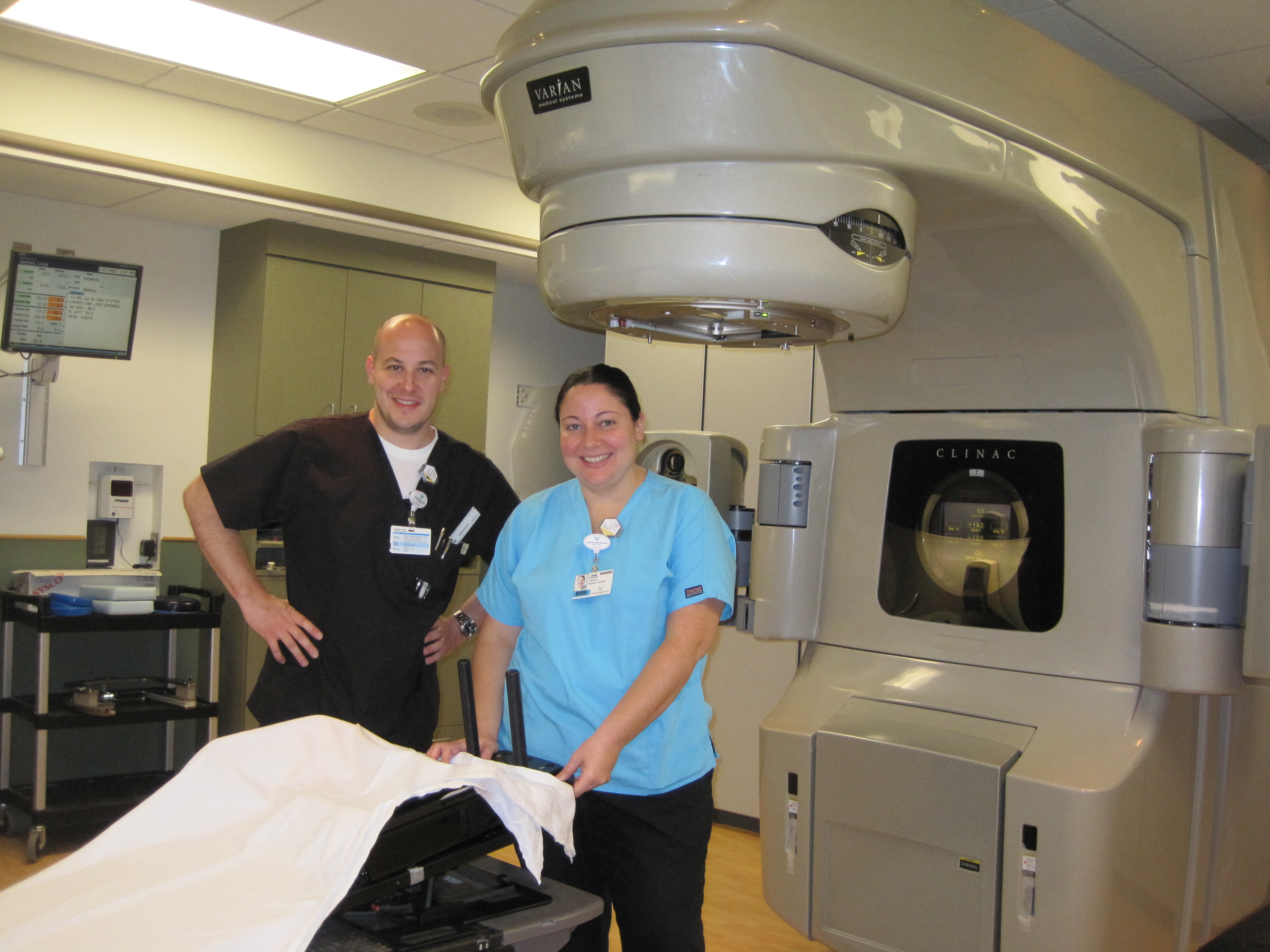
Here are the technicians who gave me radiation for 7 weeks at Lankenau Hospital. I thank them all!!
Well, I missed October because I could not remember how to access my blog!! But I wanted to share with you my mammogram story and emphasize how important yearly mammograms are. I had breast cancer in 2012 which was found early and dealt with. After 5 years of after care, my surgeon Dr. Dalhia Sataloff dismissed me but said if I ever has a problem, I could contact her and we’d deal with it.
Last May at my annual mammogram, they found something and wanted me to get a biopsy. I asked that the images from the mammogram be sent to Dr Sataloff. She called me and said she agreed that a biopsy was in order. She also said it could be nothing but if it was something, we’d deal with it. I told her when the biopsy was scheduled. After the biopsy, I told them to send the report to her as well as my gynecologist who ordered the mammogram.
Two days after the biopsy, Dr. Sataloff called me to say the the biopsy showed calcification and she agreed with the recommendation that I get another mammogram in December rather than wait a year. I said I was glad they had sent her the results as I requested. She then informed me that they did not send her the results. She noted the date I said my biopsy was on her calendar and called them to send the results to her!
Go back to a previous blog post called The Doctor Wears Prada to hear about the wonderful job she did on my surgery!
What a caring and outstanding doctor she is! How safe and cared for I feel! She is now the head of surgery at Pennsylvania Hospital and a very busy woman who still finds time to be a caring doctor. I am so lucky to have her on my team.
Please get your annual mammogram!!
The pandemic has affected many aspects of breast cancer care in the United States and across the globe. From April 28 through June 7, 2020 more than 600 people shared how COVID-19 affected their breast cancer care in an online survey conducted by Breastcancer.org.
From these respondents (83% of whom live in the United States, and 42% of whom were in active treatment), we learned:
- There were delays in many aspects of breast cancer care, including routine clinical visits (32%), surveillance imaging (14%), routine mammograms (11%), reconstruction (10%), radiation therapy (5%), hormonal therapy (5%), mastectomy (5%), and chemotherapy (4%). About 30% reported no delays.
- About 30% reported they chose or considered delaying or changing their own treatment plans due to concerns about contracting COVID-19.
- About 11% reported that COVID-19 affected their desire or ability to get a second opinion.
- Other health conditions linked to a higher risk of complications from COVID-19 were common: 30% reported obesity, 28% had asthma, 15% had a heart condition, and 14% had diabetes.
- About 80% reported feeling some level of anxiety about their care being affected by the pandemic.
- More than half (58%) have used telemedicine, and about 45% found virtual appointments to be helpful and effective.
- About 67% reported being satisfied or very satisfied with the quality of care they were receiving.
- About 26% reported they or a family member had lost their job, and about 42% reported they or a family member had their hours cut.
- Our findings are similar to those reported by the American Cancer Society (ACS) from its survey of more than 1,200 people diagnosed with a variety of cancer types. In the ACS survey, 87% reported their healthcare was affected in some manner by early May, up from 51% in April. The most common changes for people in active treatment were for in-person cancer provider appointments (57%), imaging services (25%) and surgery (15%).
- Almost 1 in 4 people who took the ACS survey reported it was harder to contact healthcare providers. And 1 in 5 people said they were worried about their cancer growing or coming back due to interruptions in their care. Financial problems affecting their ability to pay for care was reported by 46%, and 23% were worried about losing their health insurance.
The following is a more detailed snapshot of some of the ways care changed for people with breast cancer during the first few months of the pandemic.
Breast surgery and reconstructive surgery
Since the pandemic began, many people with breast cancer have experienced changes to their surgical treatment and reconstruction plans at medical centers around the United States.
Certain procedures have been postponed. Mastectomies and lumpectomies have been taking place without much delay for people who urgently need them. For example, some people with more aggressive types of breast cancer, such as triple-negative or HER2-positive breast cancer, have been able schedule a lumpectomy or mastectomy if their doctors determined it was the best treatment plan for them. Some people with other types of breast cancer have been offered the option of having a lumpectomy or mastectomy without much delay. But immediate reconstruction (meaning reconstruction that happens during the same surgery as the mastectomy) may not be available when elective surgeries are being postponed. Still, some hospitals do allow people who meet certain criteria to have immediate reconstruction with a tissue expander or breast implant without delay in these situations.
“Reconstructions were postponed not only to preserve hospital resources, but also to protect patients,” said Robin M. Ciocca, D.O., a breast surgical oncologist at Main Line Health in Wynnewood, Pa. “Having immediate reconstruction can increase the length of the hospital stay, increase the recovery time, and increase the risk of complications from the surgery, all of which we wanted to avoid when there was also a risk of being exposed to COVID-19.”
Treatment before surgery (neoadjuvant treatment) was used when surgeries were delayed. Many people who had to wait weeks or months for a lumpectomy or mastectomy were given either hormonal therapy, chemotherapy, or targeted therapies (depending on their diagnosis) while they waited. Treatment given before surgery — which doctors call neoadjuvant therapy — can slow or stop the growth of the cancer and may shrink some tumors. Neoadjuvant therapies are being used more often than usual in the United States during the pandemic.
In addition to some mastectomies, lumpectomies, and immediate reconstruction surgeries, the following procedures have in many cases been postponed:
- delayed reconstruction with a tissue expander, breast implant, or autologous tissue flap (that takes place sometime after a mastectomy or lumpectomy surgery and after other breast cancer treatments are completed)
- follow-up or corrective breast reconstruction surgeries, such as procedures to swap out tissue expanders for breast implants and procedures to correct asymmetry
- appointments to fill tissue expanders
- preventive (prophylactic) mastectomies to reduce the risk of developing breast cancer in women who have a genetic mutation or other risk factors that put them at high risk for breast cancer
The changes to surgical treatment plans resulted in some people needing more surgeries overall. Dhivya Srinivasa, M.D., a plastic surgeon and academic faculty member at Cedars-Sinai in Los Angeles, said some of her patients needed a second procedure because they weren’t able to get the surgery they wanted at the beginning of the pandemic.
“I have a patient who was getting a single mastectomy and wanted an immediate DIEP flap [autologous] reconstruction. She was a perfect candidate for it. But because her surgery was at the end of March, when we weren’t able to do flap reconstruction, she got an implant then and is getting the DIEP flap as a separate surgery in June,” she said.
Two of her other patients had planned to get a lumpectomy and a breast reduction in one operation, but had to get them as separate operations. “It was unfortunate for the patients who had to have multiple surgeries, but state mandates allowed for no other options,” said Dr. Srinivasa.
Many hospitals started doing elective surgeries without delays in May and June, but this continues to change as the situation evolves.
“Initial restrictions on elective surgeries were appropriately broad in the face of the healthcare crisis presented by the pandemic, but as the months pass and conditions stabilize, I think we must return to the standard of care for our patients,” said Elisabeth Potter, M.D., a plastic surgeon in Austin, Texas, and affiliate faculty member in the department of surgery and perioperative care at the University of Texas at Austin Dell Medical School.
Dr. Potter said that even in areas with spikes in COVID-19 cases, surgeons can work with hospital administrators to advocate for surgeries to take place without delays when that is what’s in the best medical interest of the patient.
Systemic therapy (chemotherapy, hormonal therapy, targeted therapy, immunotherapy)
People who were scheduled to start or to continue receiving chemotherapy, hormonal therapy, immunotherapy, or targeted therapy mostly did so without delays, although there were adjustments to treatment plans.
Appointments with oncologists often took place through telemedicine rather than in person. And oncologists postponed some appointments if they felt it was safer to do so.
Brian Wojciechowski, M.D., a medical oncologist at Riddle, Taylor, and Crozer hospitals in Delaware County, Pa., and Breastcancer.org medical adviser, said that during March and April he was mainly seeing patients in person who had an urgent issue, such as someone who had discovered a new breast lump. “But we delayed in-person visits if we didn’t think delaying would cause harm or risk for the patient,” he said. “For instance, if a patient is a long-term breast cancer survivor whom I usually see for routine follow up every 6 months or so, we could delay that appointment for 3 months.”
Here are other examples of how treatment changed:
- As mentioned above, certain people who had a mastectomy or lumpectomy delayed by weeks or months were given either hormonal therapy, chemotherapy, or targeted therapy before surgery. This approach can prevent the cancer from progressing and can potentially shrink tumors.
- Some cancer centers have been requiring that patients get a COVID-19 test before a chemotherapy treatment. If the person tests positive for COVID-19, in most cases they won’t receive chemotherapy until they are re-tested at a later point and found to be negative. This is to protect them from developing serious complications from a COVID-19 infection because they are immunocompromised due to chemotherapy.
- In some cases, chemotherapy regimens that required a weekly visit to an infusion center were switched to a visit every 3 weeks if it would not change the effectiveness of the treatment.
- People receiving chemotherapy were more often prescribed growth factor medications such as Neulasta (chemical name: pegfilgrastim) to increase their white blood cell count and make them less vulnerable to developing serious complications if they were infected with COVID-19.
- Infusion centers made changes to help keep people safer, such as staggering appointment times, seating people in private infusion rooms or in seats spaced further apart than usual, not allowing visitors, and screening everyone for COVID-19 symptoms before they enter the building. Also, some people started getting routine lab tests (such as blood tests) done at another facility so that visits to the infusion center could be shorter.
- Some cancer centers have set up curbside clinics so people can receive services like blood draws and injections in their car.
- People who were receiving GnRH agonists given by injection such as Zoladex (chemical name: goserelin) or Lupron (chemical name: leuprolide) in some cases switched from receiving them at a clinic to administering them at home, or started receiving a different dose less frequently. Some people reported having trouble getting their injections on time or at the healthcare facilities where they usually received them.
From www.breastcancer.org
As anyone who has gone to a clinic or hospital in recent months knows, the pandemic is changing how healthcare is delivered. Healthcare facilities of all types and sizes are taking new steps to keep patients and staff from getting COVID-19.
“We all understand that COVID-19 is not going away, and so what we are all trying to do is adapt to the new normal so that we can limit exposures in the hospital and to healthcare workers,” said Julie Sprunt, M.D., FACS, a breast surgeon with Texas Breast Specialists in Austin, Texas.
Some of the new safety strategies that healthcare facilities have adopted include:
Screening for COVID-19 symptoms
You are asked over the phone before a medical appointment and when you arrive at an appointment whether you have COVID-19 symptoms, have been in close contact to someone with COVID-19, or are waiting on an outstanding COVID-19 test result.
Some facilities ask these questions and take each person’s temperature with a thermal scanner at the door, before they go into the building.
Universal masking
At many healthcare facilities, everyone — patients and staff members — must wear masks all the time.
More use of telemedicine
Many more medical appointments are taking place through telemedicine, either by phone or online video, instead of in person. Medicare, Medicaid, and most private insurers are now covering telehealth visits. Some insurers are waiving co-pays and deductibles for some visits.
Still, it’s important to know that, depending on the regulations in the state where you live, there may be some limitations on seeking a second opinion or setting up ongoing care through telemedicine with a doctor in a different state. You may need to get a written referral from a doctor in your own state, or you may be unable to get a consultation from a doctor who is not licensed to practice in your state.
Physical distancing
To prevent people from being too close to each other, healthcare facilities have started adding more time between appointments, having people wait outside or in their cars instead of in waiting rooms, and seating people further apart at infusion centers.
COVID-19 testing before surgery and chemotherapy
Every person who is scheduled for surgery is now required to get tested for COVID-19 beforehand. If you test positive, your surgery will be postponed, even if you don’t have any COVID-19 symptoms. This is to protect the surgical team from being exposed to COVID-19 and to protect you from the risk of having surgical complications because of COVID-19. Some medical centers are also testing people for COVID-19 before they receive chemotherapy treatments. If you test positive for COVID-19, it’s likely that you won’t receive chemotherapy until you’re re-tested and have a negative result. This is to protect you from developing serious COVID-19 complications when chemotherapy has weakened your immune system.
Shorter hospital stays
After surgery, many people are being sent home earlier from the hospital than they would have been in the past. Some people are sent home on the same day they have surgery, while others may spend only 1 or 2 nights in the hospital. This reduces the risk of being exposed to COVID-19 at the hospital. Shorter hospital stays also free up hospital beds and other resources that may be needed for people with COVID-19. It also allows people to spend more of their recovery with their loved ones, since visitors may not be allowed at some hospitals.
Care that surgeons used to provide in person after surgery is often being provided through telemedicine now. For example, surgeons are using video calls to check incisions for signs or symptoms of infection and to coach patients through removing their own surgical drains.
Limiting visitors
Some people have not been allowed to bring anyone with them when they go into a clinic, hospital, or infusion center, and visitors are sometimes not allowed during hospital stays. Exceptions have been made for people who need a caregiver to go with them to an appointment or procedure because they have cognitive problems or severe symptoms. “Unfortunately, it’s a lot to ask to somebody with breast cancer to not have someone spend the night with them in the hospital,” said Dr. Sprunt.
From www.breastcancer.org
Most people infected with the COVID-19 virus will have mild to moderate respiratory symptoms and recover without requiring special treatment or hospitalization. Some will have no symptoms at all.
According to the CDC, currently having cancer increases your risk of having serious complications if you do become infected with COVID-19. At this time, it’s not known if having a history of cancer increases your risk of serious complications.
This higher risk for serious complications from COVID-19 for people currently diagnosed with cancer likely is because having cancer puts a strain on the body and also because certain treatments can cause people to become immunocompromised (have a weakened immune system) or have lung problems.
The following breast cancer treatments can weaken the immune system:
- all standard chemotherapy drugs, such as Taxol (chemical name: paclitaxel), Taxotere (chemical name: docetaxel), Cytoxan (chemical name: cyclophosphamide), and carboplatin
- certain targeted therapies, such as Ibrance (chemical name: palbociclib), Kisqali (chemical name: ribociclib), Verzenio (chemical name: abemaciclib), and Piqray (chemical name: alpelisib)
Typically, the immune system recovers within a couple of months after you stop receiving chemotherapy or targeted therapy. But your immune system’s recovery time can vary and depends on several factors. If you received those treatments in the past, it’s not clear if you are at higher risk for serious complications from COVID-19. If you’re receiving ongoing treatment with these medicines for metastatic breast cancer, it’s likely that your immune system is weakened.
Some chemotherapy medicines and targeted therapies can also cause lung problems, which could put people at higher risk for serious COVID-19 complications. Rare but severe lung inflammation has been linked to Ibrance, Kisqali, Verzenio, and the immunotherapy drug Tecentriq (chemical name: atezolizumab).
People with metastatic breast cancer in the lungs also can have lung problems that may get worse if they develop COVID-19.
Some people with breast cancer may have other risk factors for developing serious complications from COVID-19. For example, you are at greater risk if you:
- are age 65 or older; though the risk for serious complications increases with age, so people in their 50s are at higher risk than people in their 40s and people in their 60s and 70s are at higher risk than people in their 50s; the greatest risk for serious complications is among people age 85 and older
- have chronic obstructive pulmonary disease (COPD)
- have a serious heart condition
- have type 2 diabetes, chronic kidney disease, or sickle cell disease
- are obese
- smoke
Research on COVID-19 and cancer is very limited, so it’s not clear how COVID-19 may affect people diagnosed with cancer. It’s also not clear how different types of cancer may affect COVID-19 outcomes.
To provide more information, researchers at Vanderbilt University have launched a project called the COVID-19 and Cancer Consortium (CCC19) to track outcomes of adults diagnosed with cancer around the world who have been infected with COVID-19. More than 100 cancer centers and other organizations are participating.
The first report from this project was published in the Lancet on May 28, 2020, and included information on 928 people diagnosed with cancer in Spain, Canada, and the United States who also were diagnosed with COVID-19. Breast cancer was the most common cancer in the group, affecting about 20% of the people. Half the people were older than 66, and 30% were older than 75.
About 13% of the people in the study died, which is about twice the death rate for all people with COVID-19. A higher risk of dying for people with both cancer and COVID-19 was linked to the same risk factors for people without cancer who get COVID-19, including:
- being older
- having a serious underlying health condition, such as diabetes, kidney disease, or heart problems
- being a man
Still, the researchers also found risk factors that were unique to the people diagnosed with cancer, including:
- having active (measurable) or growing cancer
- a poor ECOG performance status score, which measures a person with cancer’s ability to function, care for themselves, and engage in physical activity
Cancer type and cancer treatments did not appear to affect the risk of dying from COVID-19. If you are very concerned about how your specific breast cancer treatments may affect your ability to recover from COVID-19, it makes sense to talk to your doctor and decide on a treatment path that gives both of you peace of mind.
Other small studies that looked specifically at people with breast cancer at hospitals in France and New York City showed similar encouraging findings: most people with breast cancer recovered from COVID-19 if they were infected, and underlying medical conditions seemed to increase the risk of COVID-19 complications more than breast cancer treatments did.
Again, it will take time to perform enough research for scientists to completely understand how a cancer diagnosis affects COVID-19 outcomes.
From www.breastcancer.org
On March 11, 2020, the World Health Organization (WHO) said that COVID-19 had become a pandemic — a disease that has spread across multiple countries. The U.S. declared a national emergency shortly after. As the first shutdowns began and many of us started to learn the term “social distancing,” thousands of Americans received even more troubling news: they had a breast cancer diagnosis.
Nancy Richards, 67, of Barnstable, Mass., was one of those people. She found out in March that she had invasive ductal carcinoma. Because it was her second breast cancer diagnosis, she quickly made up her mind about what to do without having to do much research.
“Since it was right at the beginning of the pandemic, everything was sped up very quickly,” she said. “I went from diagnosis to surgery in 2 weeks.”
On the day of her surgery — a double mastectomy with no reconstruction — Nancy had to go to the hospital alone. No visitors were allowed.
“My husband had to drop me off and pick me up at the curb. Like a parcel. That was a little bit hard,” she said.
To protect her from being exposed to COVID-19, the hospital discharged Nancy right after the surgery, and almost all of her follow-up care took place over the phone.
Like Nancy, Maria D’Alleva, 43, of Eagleville, Pa., also learned she had invasive ductal carcinoma just as the COVID-19 crisis was beginning. Her surgery was delayed from March until early June, and she wasn’t able to have the surgery she originally wanted — a double mastectomy with immediate autologous reconstruction (which uses tissue from another part of the body to create the reconstructed breasts).
During the first couple of months of the pandemic, many hospitals stopped performing breast reconstruction procedures. This was because public health authorities recommended that elective (non-urgent) surgeries be postponed, and breast reconstruction was considered to be elective surgery at the time.
If Maria wanted to have surgery in March, her surgeon told her that she could have only the breast with cancer removed (a single mastectomy) and no reconstruction.
“I didn’t want to be completely flat, wait to recover, then do some kind of reconstruction,” she said. “To avoid putting myself through more procedures and recovery, I opted to wait.”
Because she was diagnosed with hormone-receptor-positive breast cancer, Maria was able to take tamoxifen, a hormonal therapy medicine, to keep the cancer from growing while she waited for surgery. But eventually, she decided to change her original plan and was able to schedule a double mastectomy with immediate reconstruction using tissue expanders in early June. She plans to get breast implants after the tissue expansion process.
“It seemed more prudent to remove the breast cancer rather than continue to wait for the autologous reconstruction,” she said. “These are crazy times.”
As we’ve come to learn, Nancy’s and Maria’s experiences are not uncommon. Across the country, the COVID-19 pandemic has caused delays and disruptions in care for people with breast cancer — whether they are newly diagnosed, in active treatment, in long-term survivorship, or living with metastatic breast cancer — adding extra anxiety and uncertainty to an already challenging journey.
Why did COVID-19 delay breast cancer care?
In March, the Centers for Disease Control and Prevention (CDC), the Centers for Medicare and Medicaid Services (CMS), and local and state governments recommended that healthcare systems delay elective care, meaning surgeries, screenings, and other treatments that are not considered urgent or emergencies. Hospitals began canceling some surgeries and limiting other services to protect people from being exposed to COVID-19 and to save resources such as hospital beds, personal protective equipment (PPE), blood supply, and staff time so they could be used to care for seriously ill patients with COVID-19.
Medical organizations such as the:
- American College of Surgeons
- American Society of Breast Surgeons
- American Society of Clinical Oncology
- American Society of Plastic Surgeons
- American Society for Radiation Oncology
- American College of Radiology
- National Comprehensive Cancer Network
- Society of Breast Imaging
and a newly formed group called the COVID-19 Pandemic Breast Cancer Consortium have all released recommendations to help healthcare providers make decisions about managing and prioritizing the care of people with breast cancer during the pandemic.
“Time will tell whether we made the right decisions in order to try to protect our patients from the virus and take care of the breast cancer,” said Jill Dietz, M.D., FACS, co-founder of the COVID-19 Pandemic Breast Cancer Consortium, president of the American Society of Breast Surgeons, and associate professor of surgery at Case Western Reserve University School of Medicine in Cleveland, Ohio. “Having a diagnosis of breast cancer at any time is very scary, and now it’s especially difficult. I feel so bad for the patients going through breast cancer treatment during the pandemic, and I feel bad for the physicians who were told they can’t practice like they normally practice.”
Doctors are looking at each person’s unique situation and diagnosis when deciding how to best move forward with breast cancer treatment during the pandemic. For example, they are looking at whether a person has a higher risk of becoming seriously ill from a COVID-19 infection due to a weakened immune system from treatments such as chemotherapy or targeted therapy, or because of their age or other health problems.
Healthcare facilities have adopted stricter safety practices to reduce the risk of exposing people to COVID-19. At the same time, many cancer treatment plans have been changed so people don’t have to spend as much time at these facilities. Medical appointments are being spread out to avoid close contact between people, more appointments are being done over the phone or online, and hospital stays after surgery have been shortened. In some cases, fewer in-person visits are required to complete chemotherapy or radiation therapy.
Still, all of the usual treatment options may not always be available to people with breast cancer during the pandemic. In the spring, for example, people may have had to wait weeks or months for certain breast cancer surgeries unless they were diagnosed with an aggressive type of breast cancer. Also, breast imaging was only available for urgent cases, access to new treatments through clinical trials was limited, and fertility-preserving procedures were not available in some places.
Donna-Marie Manasseh, M.D., chief of the division of breast surgery and director of the breast cancer program at Maimonides Medical Center in Brooklyn, NY, said the changes to treatment plans have been stressful for both patients and healthcare providers. But she wants people with breast cancer to know that healthcare providers are carefully considering their decisions, with the goal of providing the best care possible in these circumstances.
“It’s not that the COVID-19 patients became more important than the breast cancer patients,” she said. “We’re making a true, conscious effort to figure out the right things to do for our breast cancer patients — which includes protecting them from COVID-19 and treating their cancer.”
In May, when some areas of the country were seeing a drop in COVID-19 cases, the CDC and other health authorities said that healthcare systems should consider providing elective care again. Surgeries, screenings, and other care that had been put on hold started up again in many parts of the United States during May and June. But by late June and early July, restrictions on elective care started again in new hot spots such as Arizona, Texas, and Florida. As the situation evolves, changes in breast cancer care continue to happen in some places.
From www.breastcancer.org
 toooldtodieyoungblog